
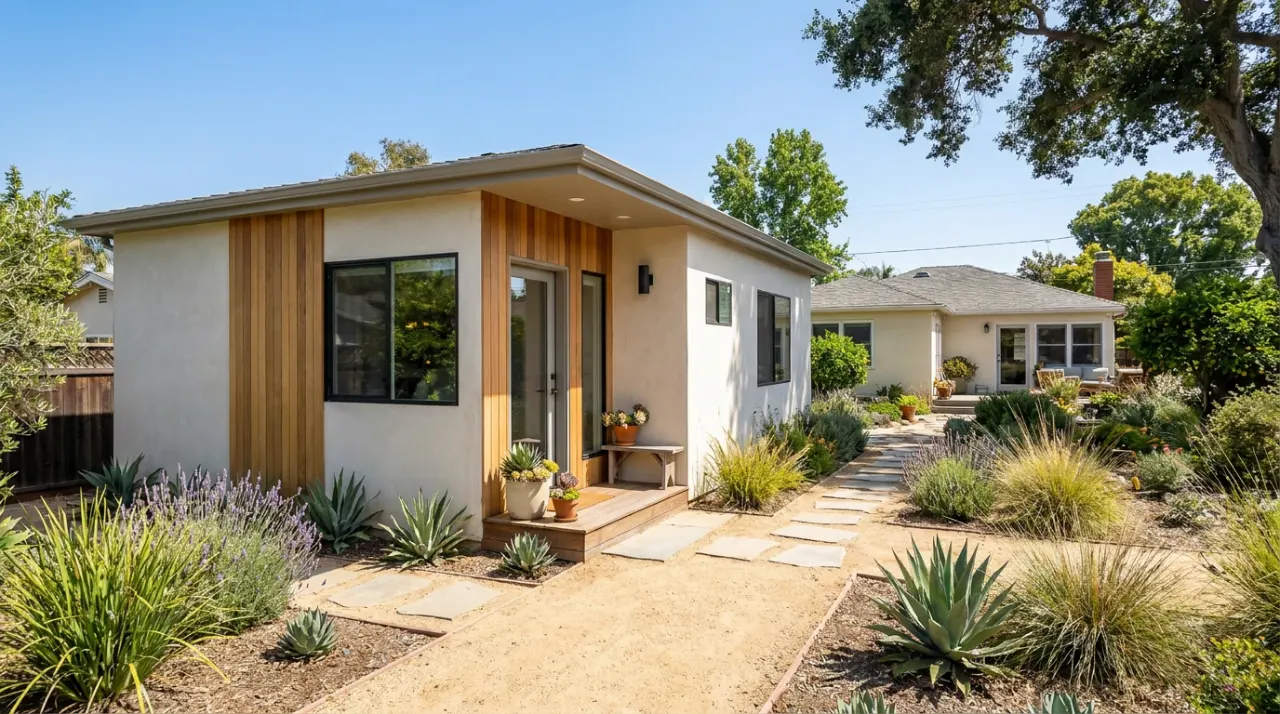
Yes. You can rent out an ADU in Orange County, and as of 2026, you can do it without living on the property yourself.
A typical Orange County ADU rents for $2,000 to $3,500 per month, with premium coastal submarkets reaching $4,000, and most units pay back their construction cost within 6 to 12 years — garage conversions on the faster end, detached new builds on the slower.
This guide breaks down real OC rental rates by area, walks through a full ROI calculation, and explains the rental rules every Orange County homeowner needs to know before they build.
At Papaya Construction Group, we handle ADU construction in Orange County, and “what can I actually rent it for?” is one of the first questions homeowners ask. Here are real 2026 numbers.
Quick Answer: ADU Rental Income in Orange County
These are long-term (30-day-plus) rental figures based on 2026 Orange County market data. Actual rent depends on size, finish quality, location, and whether utilities are included.
Thinking about building an ADU to rent out? Papaya Construction Group builds ADUs across Orange County. See our ADU construction services or call (949) 400-0032.
Can You Legally Rent Out an ADU in Orange County?
Yes — and the rules got friendlier in 2026.
Here’s what you need to know:
- You no longer have to live on the property. Under AB 976, California permanently eliminated owner-occupancy requirements for standard ADUs. That means you can rent out both your main home and the ADU, making it a true investment property. (Junior ADUs that share a bathroom with the main home are the exception and still require owner-occupancy under AB 1154.)
- Long-term rentals are fully allowed. You can rent your ADU to a long-term tenant (leases of 30 days or more) in every Orange County city. This is the standard, lowest-friction way to generate ADU income.
- Short-term rentals are restricted. Many Orange County cities limit or prohibit short-term rentals (stays under 30 days, like Airbnb), and rules vary significantly by city. Junior ADUs are barred from short-term rental statewide. Always confirm your specific city’s short-term rental ordinance before counting on nightly-rental income — plan around long-term tenancy unless you’ve verified otherwise.
For a deeper look at all the 2026 rule changes, see our guide to the new 2026 ADU laws in Orange County.
Long-Term vs. Short-Term Rental: Which Is Better in Orange County?
For most Orange County ADU owners, long-term renting is the simpler and safer path, but it’s worth understanding the trade-off.
- Long-term rental (30+ day leases) is allowed in every OC city, gives you a predictable monthly income, and involves far less day-to-day management. It’s the default strategy for a reason: stable tenants, lower turnover, and no special permitting headaches.
- Short-term rental (under 30 days) can command higher nightly rates in tourist-heavy coastal areas, but it comes with real friction. Many Orange County cities restrict or outright ban short-term rentals, often requiring permits, transient occupancy taxes, and caps on rental nights. Junior ADUs are barred from short-term rental statewide regardless of city rules.
The practical takeaway: unless you’re in a coastal OC city that specifically permits short-term rentals and you’ve confirmed its ordinance, build your ROI model around long-term tenancy.
The numbers in this guide assume long-term rates, which are the reliable foundation for an ADU investment.
Rental Rules & Legal Requirements Every OC Landlord Should Know
Once you decide to rent, a handful of California rules shape how you operate as a landlord.
None of them are dealbreakers, but knowing them upfront keeps your ADU rental compliant and protects your investment.
- You need a certificate of occupancy first. Before you can legally rent your ADU, it must pass final inspection and receive a certificate of occupancy. This confirms the unit meets code and is safe to live in.
- The unit must be permitted. Renting out an unpermitted ADU is risky — it can lead to fines and, in some cases, forced removal of your tenant. If you have an older unpermitted unit, California’s AB 2533 offers a legalization path; we cover it in our 2026 laws guide.
- A working stove and refrigerator are now required. As of January 1, 2026, California’s AB 628 makes a functioning stove and refrigerator part of the minimum habitability standard for any new or renewed lease. Your ADU must include both before a tenant moves in (a tenant can voluntarily agree to supply their own fridge, but it must be documented in the lease).
- HOAs cannot ban your rental. Since 2020, California law has prohibited homeowners’ associations from banning ADUs or barring you from renting one out. If you’re in an HOA community, it cannot stop you from operating a long-term ADU rental.
- Security deposits are capped. Under AB 12, California limits security deposits to one month’s rent for both furnished and unfurnished units. Small landlords — those who own no more than two residential rental properties totaling four units or fewer, which covers most single-ADU owners — may collect up to two months’. Plan your move-in costs accordingly.
- Fair housing law applies fully. Your ADU rental is subject to California and federal fair housing law. You must screen and treat all applicants consistently and avoid any prohibited discrimination during tenant screening.
Who Rents ADUs in Orange County?
Demand is the foundation of any rental return, and Orange County’s is strong.
Roughly 43.5% of Orange County residents are renters — above the national average — which means a deep, steady pool of potential tenants for a well-located unit.
That demand translates into reliability: well-managed ADUs typically maintain occupancy rates of 95% or higher, meaning low vacancy and consistent monthly income for the owner.
ADU tenants in Orange County tend to be young professionals, small households, downsizing seniors, and family members — groups drawn to the privacy of a standalone unit and the relative affordability compared with a full apartment or house.
That broad appeal is part of what keeps OC ADU vacancy low and rents stable.
ADU Rental Rates by Orange County Area
Rent varies widely across Orange County, driven mostly by location and proximity to job centers, beaches, and amenities.
Here’s how the submarkets compare:
The pattern is consistent with the broader rental market: coastal and South Irvine submarkets command the highest rents in Orange County, while North County offers lower rents but also lower entry costs.
A well-located, well-finished unit near transit or a job center will always rent at the top of its area’s range.
Note that if your property is in unincorporated Orange County rather than an incorporated city, the same state rental rules apply — you’ll just work with the county rather than a city department.
ADU ROI in Orange County: A Real Example
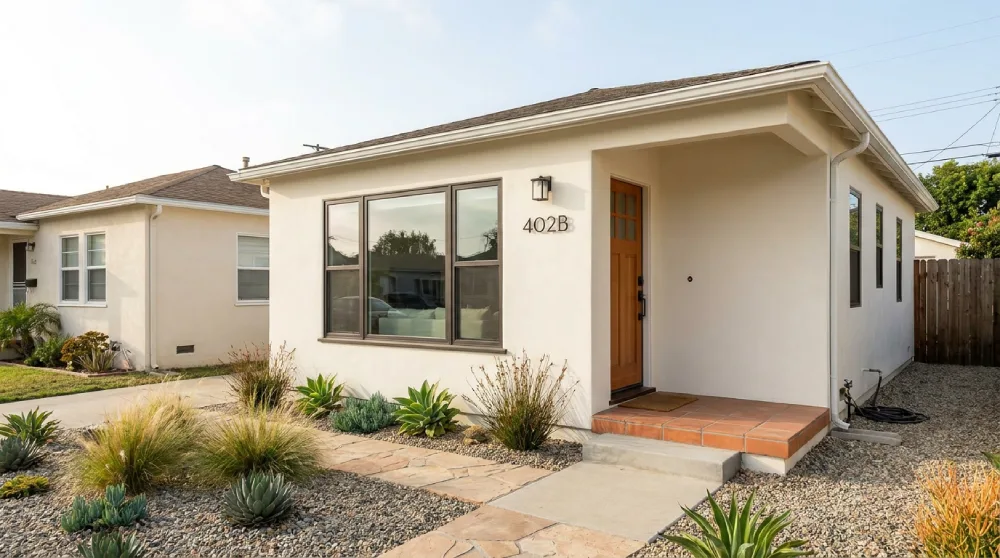
Rental income is only half the picture — the real question is return on investment.
Let’s walk through a realistic Orange County garage-conversion scenario:
In this example, a $120,000 garage conversion renting at $2,400/month generates roughly $18,400 in net operating income per year after vacancy and expenses — recovering the build cost in about six to seven years and delivering a first-year return on cost around 15%.
A detached new build costs more upfront ($250,000–$400,000) and rents higher, but typically shows a longer payback of 8 to 12 years because the higher construction cost outpaces the rent premium.
Garage conversions usually deliver the fastest payback and strongest cash-on-cash return, which is why they’re the most popular entry point for OC investors.
What Affects Your ADU’s Rental Income & Return
Several factors move your actual numbers up or down:
- Location within OC. As the area table shows, the same unit can rent for $1,800 in North County or $3,500+ near the coast. Location is the single biggest driver.
- Unit size and bedroom count. Two-bedroom units command meaningfully higher rent than studios, but cost more to build. A 1-bedroom often hits the sweet spot of strong rent for moderate cost.
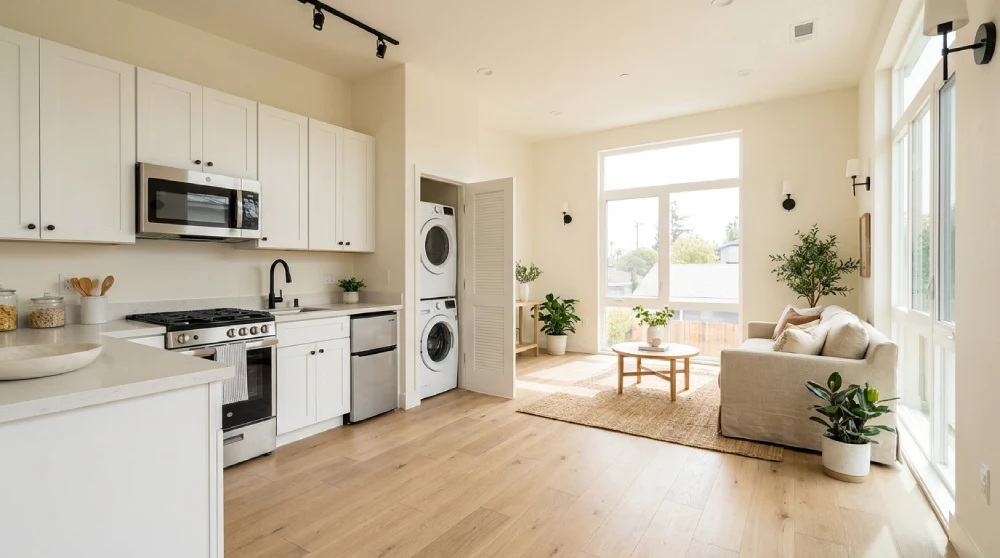
- Finish quality. A well-finished unit with in-unit laundry, modern appliances, and good natural light rents faster and higher. Cutting corners on finishes can cost you in vacancy and rent.
- Whether you include utilities. Bundling utilities into rent can raise the headline number, but adds cost and complexity. Separate metering is cleaner for a true rental.
For a full cost breakdown by ADU type, see our guide to ADU costs in Orange County.
Beyond Rent: The Property Value Boost
Rental income isn’t the only return. An ADU also increases your property’s market value — often by 50% to 100% of the construction cost, and sometimes more in high-demand OC neighborhoods.
So a $150,000 ADU might add roughly $75,000 to $150,000 in resale value on top of the monthly rent it generates.
There’s a tax consideration to model in, too: under Proposition 13, your existing home keeps its current assessed value, but the new ADU is assessed separately.
Expect a property-tax increase of roughly a few thousand dollars per year, typically offset by a single month or less of rental income.
And thanks to AB 1033, in cities that have opted in, you may eventually be able to sell the ADU separately as a condominium — though that process is complex and city-dependent.
Operating Costs & Ownership Considerations
Your net return depends on the costs of owning and operating the rental, not just the headline rent.
Budget for these before you build:
- Property management. If you don’t want to self-manage, a property manager typically charges 8–10% of monthly rent to handle tenant screening, rent collection, and maintenance calls. That’s a real line item, but it buys you a hands-off rental.
- Landlord insurance. A standard homeowner’s policy may not fully cover a rental unit. Most OC ADU owners add a landlord insurance policy or rider to cover the rental and protect against property damage and liability.
- Maintenance and turnover. Budget roughly $1,500–$3,000 per year for upkeep, plus professional cleaning between tenants (about $200–$350 each turnover) to keep the unit listing-ready.
- Financing costs. If you didn’t pay cash, factor in your loan. Many OC homeowners fund an ADU with a HELOC, cash-out refinance, or construction loan, and the interest rate you lock in directly affects your cash flow.
- Property taxes. As noted above, only the new ADU value is reassessed under Proposition 13, but build that modest annual increase into your model.
Run these against your projected rent to find your true net operating income.
A well-located OC unit still pencils out strongly even after all of them, but an honest model beats an optimistic one every time.
Tips to Maximize Your ADU Rental Income
- Build where demand is strongest. If you have flexibility on placement, orient toward privacy and a separate entrance — tenants pay more for a unit that feels independent.
- Invest in durable, rentable finishes. In-unit laundry, a full kitchen, and good lighting raise rent and reduce vacancy.
- Meter utilities separately so you can charge tenants directly and keep your accounting clean.
- Target long-term tenants to avoid short-term rental restrictions and reduce turnover costs.
- Write a clear lease covering rent, deposits, utilities, parking, and maintenance responsibilities.
- Model your real numbers before building — use actual comparable rents in your specific OC neighborhood, not a builder’s optimistic estimate.
Want to know what an ADU would cost on your lot? Book a free estimate or call (949) 400-0032.
Frequently Asked Questions
Build a Rental-Ready ADU With Papaya Construction Group
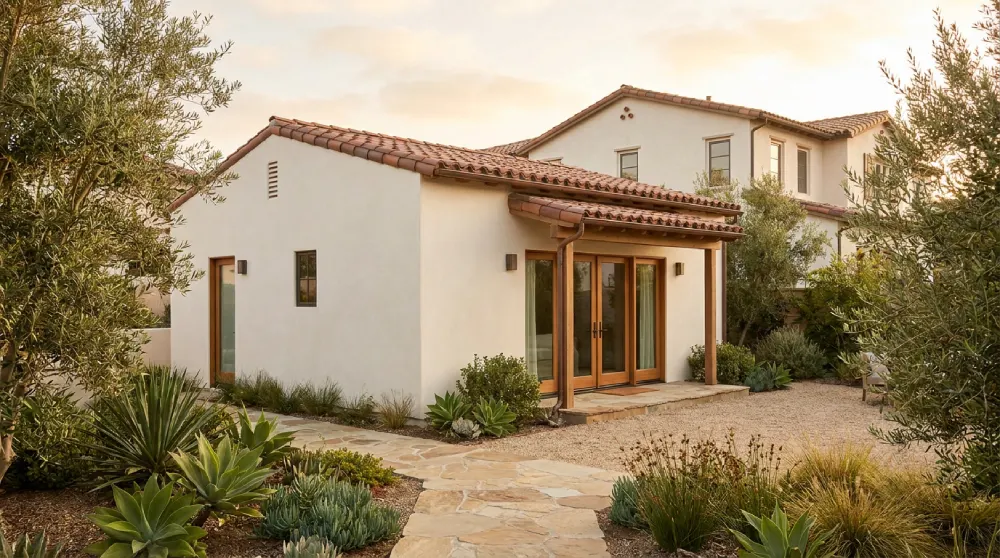
A well-designed accessory dwelling unit is one of the strongest income-generating investments Orange County property owners can make, but the returns depend on building the right unit, in the right place, to the right finish level.
Our team handles design, permitting, and construction under one roof, so your rental-ready ADU is built to perform.
We build ADUs throughout Orange County, including Irvine, Santa Ana, Anaheim, Huntington Beach, Garden Grove, Fountain Valley, and the surrounding Southern California communities.
Contact Papaya Construction Group today for a free ADU consultation, or explore our Orange County ADU construction services to start planning your investment.
Rental and ROI figures in this guide are 2026 estimates based on Orange County market data and are provided for general information, not financial advice. Actual rent, returns, and tax impacts vary by property, location, and market conditions. Research comparable rents in your specific neighborhood before making an investment decision.