
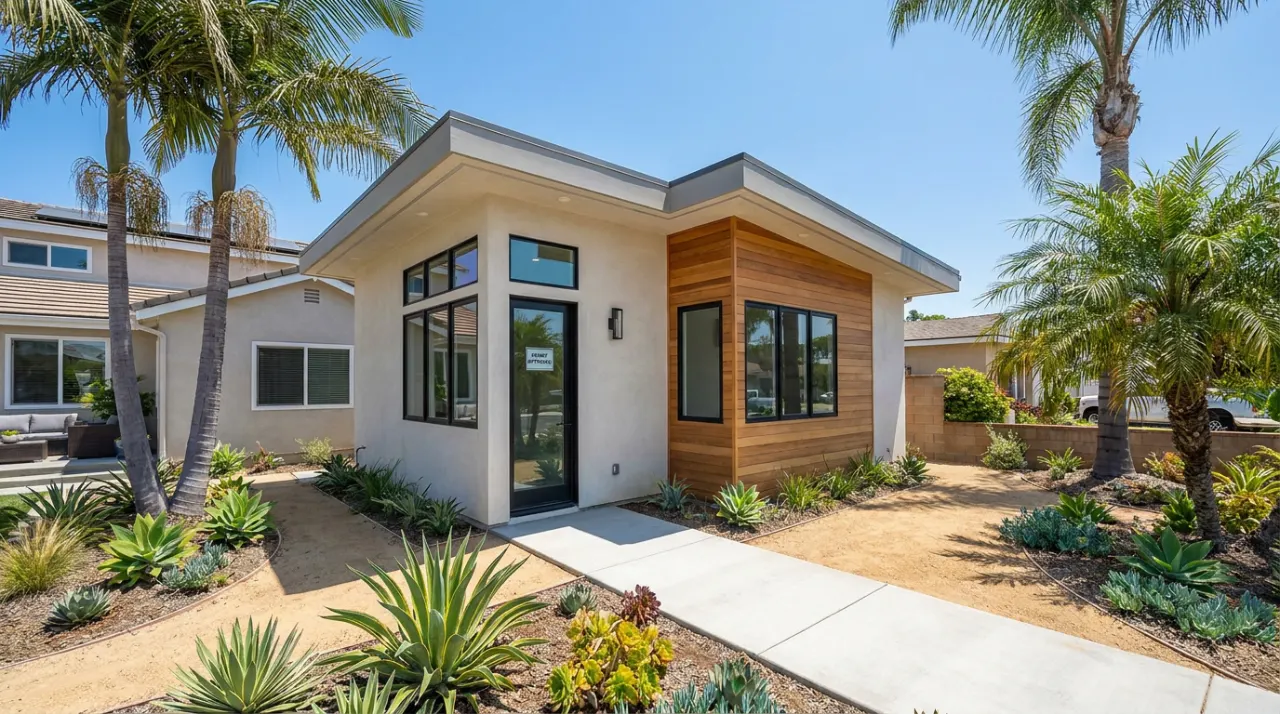
If you’re a homeowner in Orange County considering an ADU, 2026 is the best year yet to build.
California’s new ADU laws — which apply to every Orange County city from Irvine to Santa Ana to Huntington Beach — make the process easier, faster, and cheaper than ever.
As of January 1, 2026, a package of new bills, led by SB 543, AB 1154, and AB 462, puts cities on strict permit deadlines, clarifies size and occupancy rules, and streamlines coastal approvals.
For Orange County homeowners specifically, this means shorter waits at your city’s building department, more freedom to rent, and fewer fees.
Here’s what changed and exactly what it means for your project.
At Papaya Construction Group, we build ADUs throughout Orange County, and these legal changes come up in nearly every consultation.
This guide breaks down each new law in plain English — no legal jargon — so you know where you stand before you build in OC.
Quick Summary: What Changed for 2026
Below, we explain each one and what it means in practice for an Orange County build.
SB 543: Cities Now Face a Permit Deadline
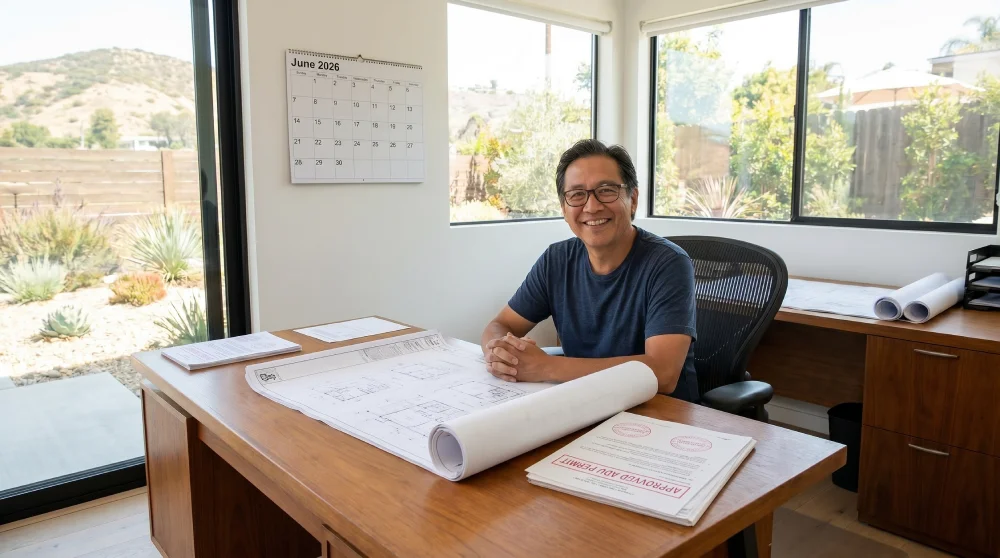
For most homeowners, SB 543 is the most important change of 2026.
It attacks the single biggest frustration in ADU permitting — how long cities take to review applications.
Under SB 543, a local agency must determine whether your ADU or Junior ADU application is complete within 15 business days of receiving it.
If the city misses that deadline, your application is automatically deemed complete.
If it’s incomplete, the city must give you a written list of exactly what’s missing — and after you resubmit, it generally cannot raise new issues that weren’t on the original list.
This matters because, before SB 543, cities could repeatedly bounce an application with vague “still incomplete” responses, restarting the clock each time and preventing the downstream 60-day approval deadline from ever starting.
Now the completeness review itself is deadline-driven, which means the 60-day decision clock actually has to start running.
In practice, that should bring a typical ADU permit down to roughly three months total, compared to 6–12+ months under the old system.
SB 543 also did three other useful things. It confirmed that ADUs under 750 square feet are exempt from all impact fees.
It standardized that all size measurements now refer to interior livable space, so exterior walls and stairs no longer count toward your square-footage cap.
And it gave the state housing department real authority to void non-compliant local ordinances.
Faster permitting doesn’t change one constant: every ADU must still be built to the California Building Code, with inspections at key milestones.
The 2026 laws speed up approval timelines — they don’t lower the construction and safety standards your unit has to meet.
You can speed approval even further by using pre-approved ADU plans.
State law now requires cities to offer a set of pre-approved plans and to decide on them on a faster track, so choosing one of these designs can shave weeks off your permitting timeline compared with a fully custom set.
AB 1154: JADU Owner-Occupancy Now Depends on the Bathroom
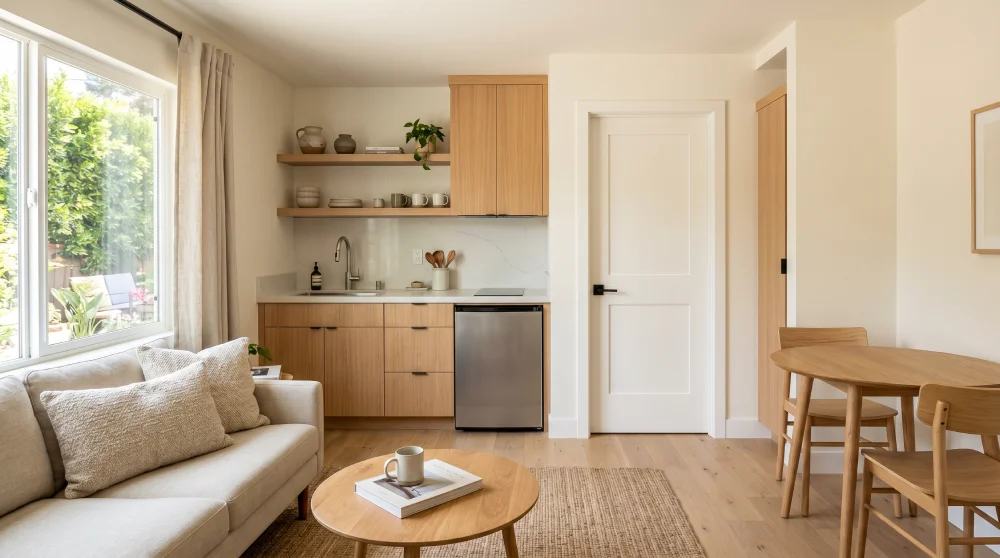
A Junior ADU (JADU) is a small unit — up to 500 square feet — created within the walls of your existing home.
Historically, JADUs always required the owner to live on the property. AB 1154 changes that, and the deciding factor is surprisingly specific: the bathroom.
Under AB 1154, if the JADU has its own private bathroom, owner-occupancy is not required.
If the JADU shares a bathroom with the main home, owner-occupancy is still required.
That makes bathroom configuration a design decision with real regulatory consequences — and one you’ll want to settle before construction begins, not after.
One rule stays constant regardless of bathroom setup: all JADUs are subject to a 30-day minimum rental term, so they cannot be used as short-term rentals.
AB 462: Streamlined Coastal & Disaster Permits
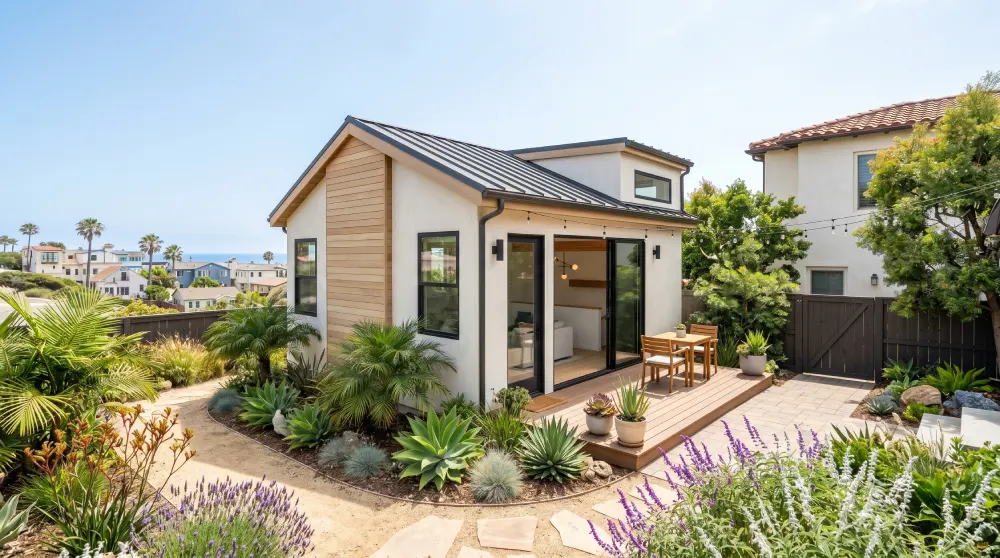
Building an ADU in a California coastal zone historically required a Coastal Development Permit — a process that could take 6–18 months and cost thousands in fees.
For Orange County’s coastal communities, that was often a dealbreaker.
AB 462 introduces a faster, streamlined approval pathway for coastal-zone ADUs.
This is especially relevant in Orange County, where coastal communities like Huntington Beach, Newport Beach, Laguna Beach, and Dana Point all fall under coastal-zone rules that historically slowed ADU projects.
It also adds an important disaster provision: in counties under a state emergency proclamation issued on or after February 1, 2025, homeowners can obtain a certificate of occupancy for a detached ADU before the primary home is rebuilt — meaning you can legally live in your ADU while your main house is under reconstruction.
Separately, SB 1077 requires the California Coastal Commission to issue clearer, ADU-friendly guidance to local governments by July 1, 2026, which should further smooth coastal builds in the second half of the year.
AB 976: Owner-Occupancy Permanently Gone for Standard ADUs
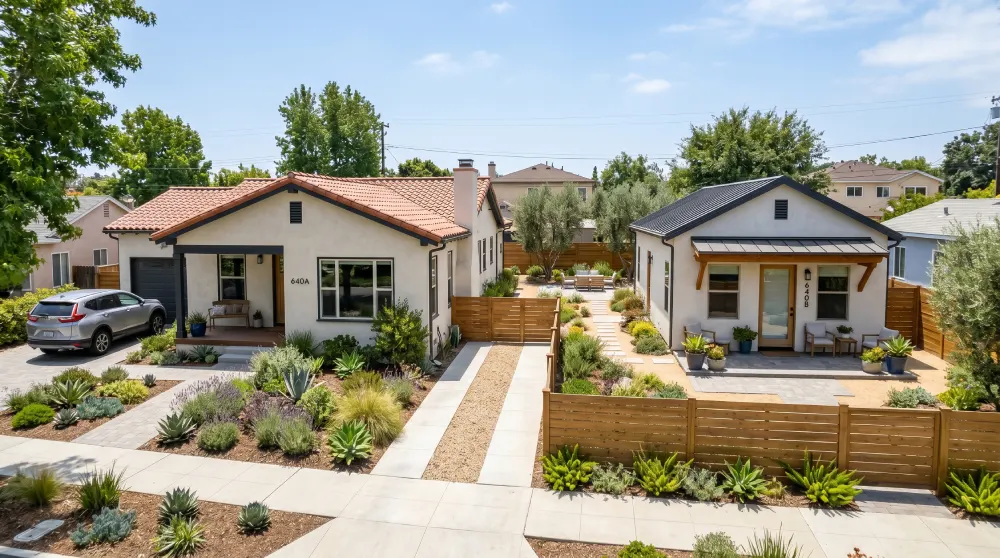
This one took effect before 2026 but remains foundational, so it’s worth restating clearly:
AB 976 permanently eliminated the owner-occupancy requirement for standard ADUs.
The earlier rule had a sunset date of January 1, 2025; AB 976 removed that sunset entirely.
In practice, this means you are never required to live on the property to rent out your ADU.
You can rent out both your primary residence and the ADU — a major shift that makes ADUs viable as pure investment properties.
(Remember the JADU exception above under AB 1154.)
SB 1211: Up to Eight ADUs on Multifamily Lots
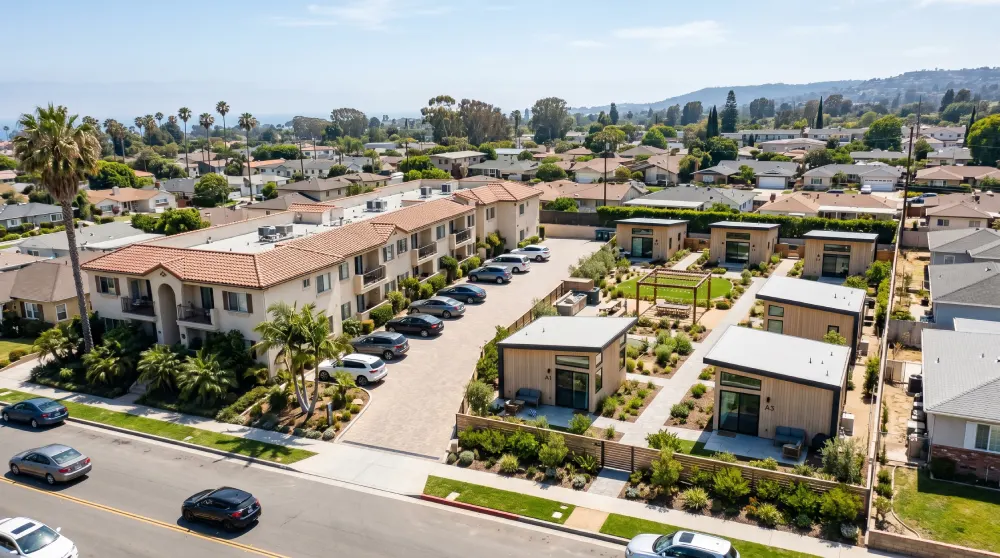
If you own a multifamily property — an apartment building or duplex with unused yard space — SB 1211 is significant.
It expanded the number of detached ADUs allowed on multifamily lots to up to eight, capped at one ADU per existing primary unit.
These units go through the same streamlined ministerial approval process as single-family ADUs.
For most single-family Orange County homeowners this won’t apply, but for small-scale landlords and multifamily investors, it opens development potential that simply didn’t exist before.
AB 1033: You Can Now Sell Your ADU Separately (in Some Cities)
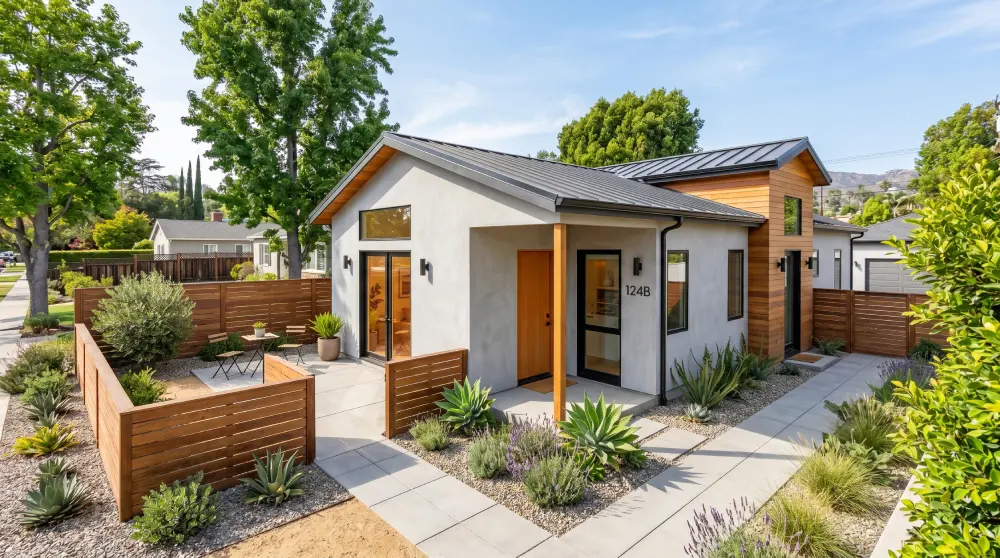
AB 1033 created a legal framework allowing local agencies to permit ADUs to be sold separately as condominiums — without a lot split.
This is a genuine shift: it turns an ADU from a rental asset into a potentially sellable one.
The catch is that it only applies in cities that have opted in, and the process is involved — it requires condominium plan recordation under the Davis-Stirling Act, safety inspections, HOA creation, and independent utility metering.
A handful of California cities have adopted it so far, and the list is growing, but it remains complex and few homeowners have completed the process.
If selling your ADU separately is a goal, confirm whether your specific city participates before counting on it.
AB 1332: Pre-Approved Plans, Taller Units, and Looser Setbacks
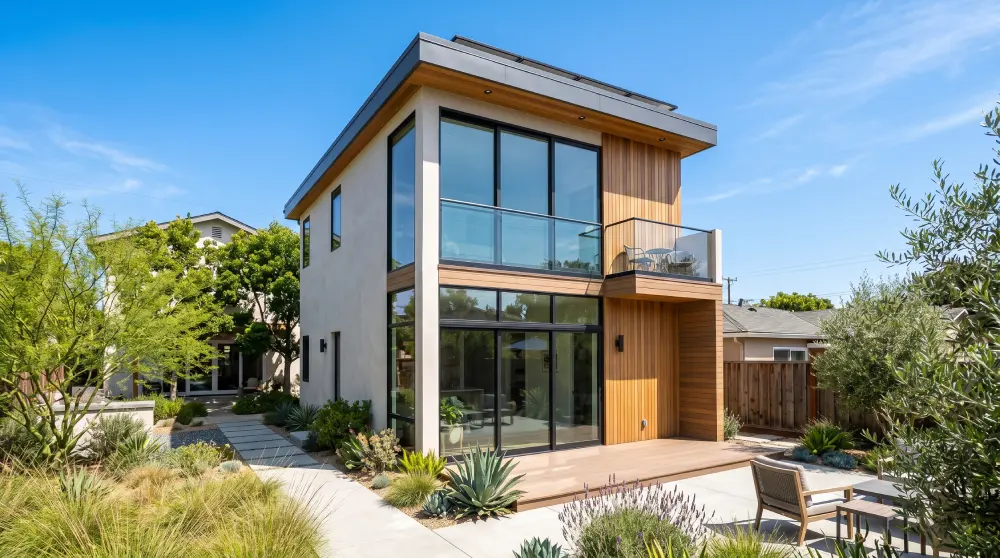
AB 1332 tackles design and timeline friction from several angles at once.
Its headline requirement is that every city and county must maintain a program of pre-approved ADU plans — standardized designs already cleared by the building department.
If you choose one of these plans, the city must approve or deny it within 30 days, far faster than the back-and-forth of a fully custom plan check.
The law also relaxed two physical constraints that often shaped what homeowners could build.
It increased allowable height limits up to 25 feet in some cases, which can make a two-story or above-garage ADU feasible where it wasn’t before.
And it reinforced the 4-foot side and rear setback standard, meaning cities generally can’t force your ADU farther from the property line than that.
For an Orange County homeowner, the practical upshot is more buildable area on tight lots and a meaningfully faster path to permit if you’re willing to start from a pre-approved design.
AB 2533: A Path to Legalize an Older Unpermitted ADU
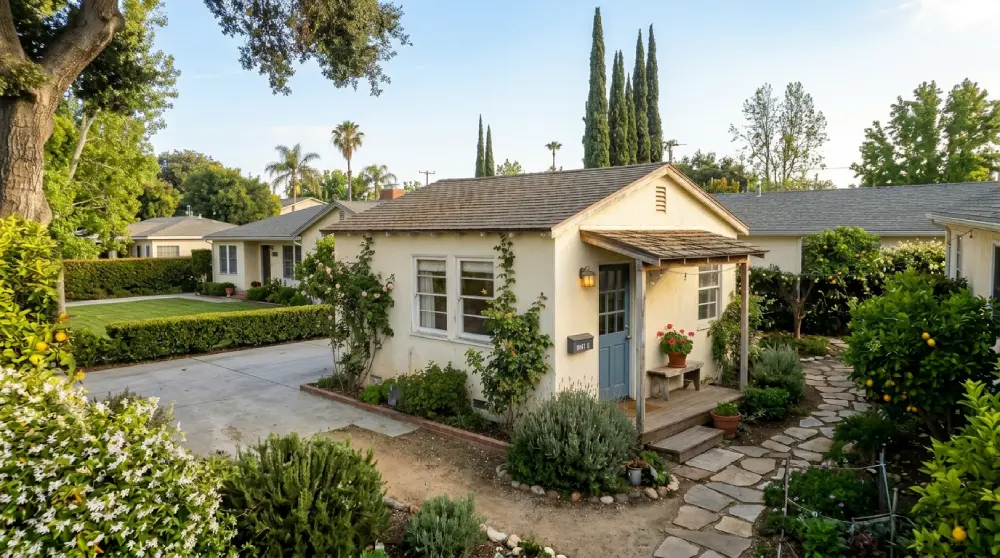
If you already have an unpermitted ADU — a garage conversion, backyard cottage, or basement unit built without a permit — AB 2533 is one of the most useful laws on the books.
It gives homeowners a clear path to legalize ADUs built before January 1, 2020, focusing on health and safety rather than full modern-code compliance.
In practice, that means the unit is reviewed against a substandard-housing safety checklist.
With a clean inspection and targeted improvements, you can obtain a certificate of occupancy without tearing the unit down and without harsh penalties for the original lack of permits.
This is especially relevant in Orange County, which runs its own Safe ADU/JADU Legalization Program through OC Development Services for qualifying unpermitted units built before that 2020 cutoff.
If you’ve been living with an unpermitted unit and worrying about code enforcement, this is the law that addresses it — and it’s worth consulting a contractor or your local building department about the specific upgrades your unit would need.
Parking: Often No Longer Required
Parking has long been one of the most frustrating ADU hurdles, and California has steadily removed it.
Two rules matter most for Orange County homeowners:
- First, when you convert a garage, carport, or covered parking structure into an ADU, no replacement parking is required — you don’t have to rebuild the parking spaces you’re giving up.
- Second, if your property is within half a mile of public transit, the state waives the off-street parking requirement for the ADU entirely.
Given how much of Orange County sits near bus and rail lines, many homeowners find they don’t need to add a single parking space, which frees up yard area and removes a common design constraint.
What These Laws Mean for Your Orange County ADU
Put together, the 2026 changes deliver four practical wins for OC homeowners:
- Faster permits. SB 543’s 15-day completeness clock and the now-enforceable 60-day approval deadline should cut permitting from many months to roughly three.
- More rental freedom. With owner-occupancy gone for standard ADUs (AB 976), you can rent both units — and with AB 1154, even many JADUs.
- Bigger usable space. Because size is now measured by interior livable area (SB 543), you may be able to build more living space than you thought under the same cap.
- Lower upfront cost. The confirmed impact-fee exemption for ADUs under 750 sq ft can save $20,000–$50,000.
One important caveat: state law sets the floor, but your specific city’s ordinance and zoning still matter for details like exact placement and design review.
Cities are free to adopt their own ADU ordinances, but only as long as those local rules are not more restrictive than state law.
If a city ordinance conflicts with state law, the state law generally controls — and SB 543 now lets the state void non-compliant local rules.
The California Department of Housing and Community Development (HCD) is the state agency that oversees ADU law and publishes the official ADU Handbook, which is a useful reference if you want to read the rules directly.
A narrow exception is worth noting: properties in designated historic districts can be subject to additional design review that doesn’t apply elsewhere.
So it’s always worth confirming your individual city’s process.
In Orange County, incorporated cities like Irvine, Santa Ana, and Anaheim permit through their own building departments, while unincorporated areas work with the county.
For the full cost picture alongside these legal changes, see our detailed guide to ADU costs in Orange County.
What the 2026 Laws Don’t Change
It’s just as important to know what stayed the same, so you can plan realistically.
The laws speed up approval, but they don’t lower construction standards.
Your ADU still has to meet the California Building Code, pass inspections, and satisfy objective standards for fire access, egress, and safety.
They also don’t override basic site realities.
Utility capacity, slope and grading, and the cost of running water, sewer, and power to a detached unit are unchanged — these are physical and budget factors, not regulatory ones.
And they don’t eliminate property taxes on the new unit.
Under Proposition 13 your existing home keeps its assessment, but the added ADU value is newly assessed, so expect a modest annual increase.
Finally, the laws set a statewide floor but don’t erase local design review entirely.
Cities can still apply objective design and zoning standards — they simply can’t be more restrictive than state law or use those standards to effectively block a compliant project.
The takeaway: 2026 removed most of the bureaucratic barriers, but good planning, an accurate budget, and the right contractor still determine whether your project goes smoothly.
How These Laws Apply Across Orange County
Because these are state laws, they apply in every Orange County city, but the agency you actually deal with depends on where your property sits.
Most OC homeowners permit through their own city’s building department.
Irvine, Santa Ana, Anaheim, Huntington Beach, Garden Grove, Costa Mesa, Fountain Valley, and the county’s other incorporated cities each run their own ADU permitting under the state framework.
If you’re in an unincorporated area of Orange County, you’ll work directly with OC Development Services instead.
The state laws set the rules these cities must follow — the 15-day completeness clock, the 60-day approval deadline, the impact-fee exemption under 750 square feet, and the parking waivers all apply regardless of which OC city you’re in.
What varies city to city is the practical experience: how an individual department handles its queue, its design-review preferences, and whether it offers pre-approved plan sets yet.
That’s where working with a contractor who permits across Orange County regularly saves real time.
Coastal OC homeowners in cities like Huntington Beach, Newport Beach, Laguna Beach, and Dana Point should also factor in the coastal-zone rules and the streamlining coming from AB 462 and SB 1077, covered above.
Frequently Asked Questions
Build Your Orange County ADU With Papaya Construction Group
The 2026 laws have removed many of the old barriers, but navigating permits, city ordinances, and design decisions still takes local expertise.
Our team handles design, permitting, and construction under one roof, so your project moves smoothly from concept to completion.
We build ADUs throughout Orange County, including Irvine, Santa Ana, Anaheim, Huntington Beach, Garden Grove, Fountain Valley, and the surrounding Southern California communities.
Contact Papaya Construction Group today for a free ADU consultation, or explore our ADU construction services to get started.
This guide reflects California ADU regulations as of 2026 and is provided for general information, not legal advice. ADU rules vary by city and change frequently — confirm current requirements with your local building department or a licensed contractor before starting your project.