
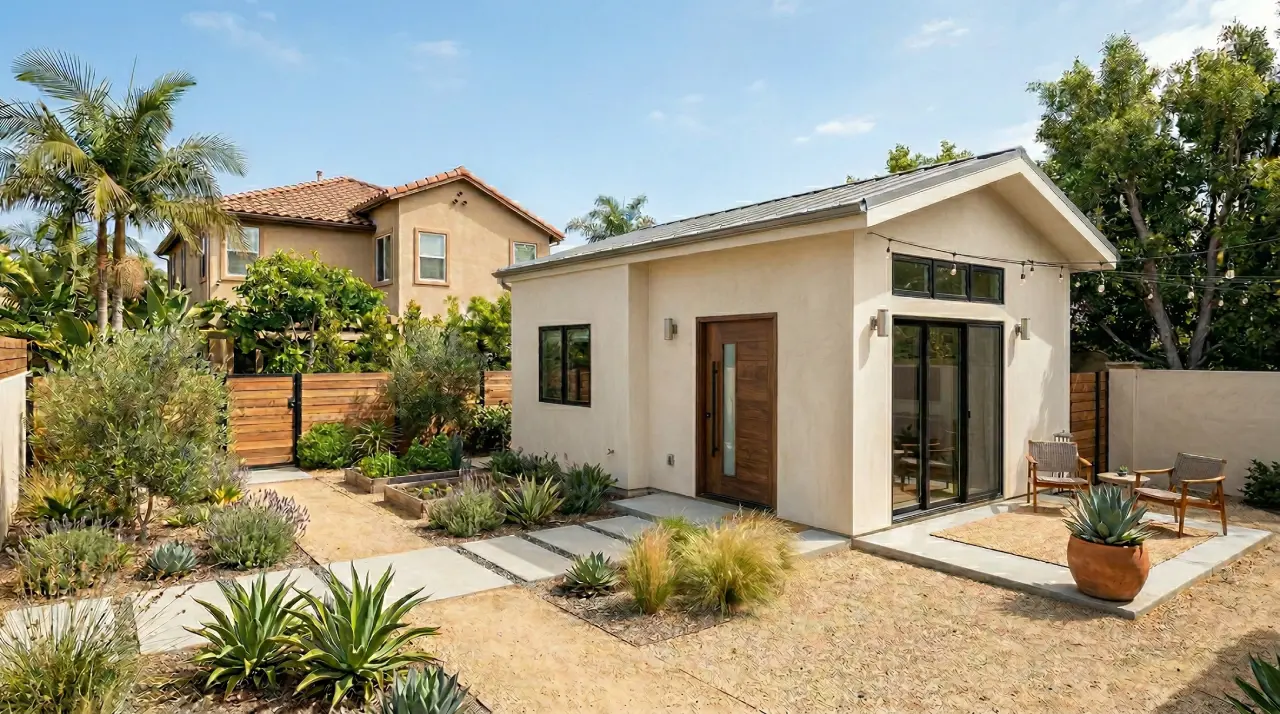
Papaya Construction Group delivers design-build ADU construction for homeowners who want more living space, more income potential, and a smoother path from plans to final build.
As a licensed, bonded, and insured California company established in 2018, Papaya combines in-house ADU design, permitting support, and construction under one roof:
Our experienced professionals help clients create accessory dwelling units that fit the property and support family goals.
Whether you are exploring a detached backyard home, a guest house, or one of the most practical garage conversions for an older lot, our team helps you move from early planning to completed construction with a clearer, more coordinated approach.
Accessory Dwelling Units Built for Modern Living
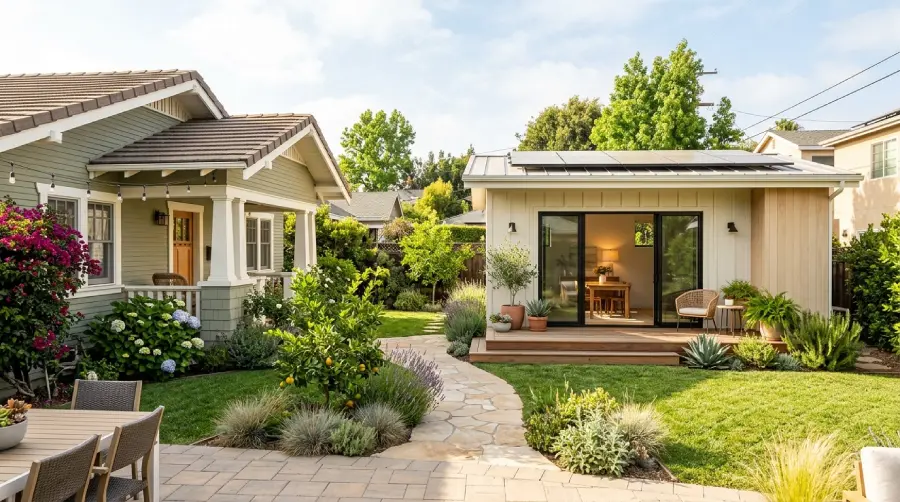
Accessory dwelling units give homeowners a flexible way to add a secondary dwelling unit without buying a new property.
Many families use an ADU to create private space for parents, adult children, guests, or tenants while improving the function of the main house and the overall lifestyle of the property.
A well-designed ADU should complement the main residence while still functioning as an independent living space.
California’s state framework continues to support accessory dwelling units, including rules that allow detached units up to 1,200 square feet and attached units up to 50 percent of the primary dwelling in many standard cases.
Papaya Construction Group approaches each project as a custom design-build effort, not a one-size-fits-all installation.
We review your lot, utilities, fire access, setbacks, and property specifics early so the process is clearer from the start.
That approach is valuable for homeowners in Anaheim and Santa Ana who want clarity before investing in full plans.
ADU Design That Brings in Natural Light and Better Daily Use
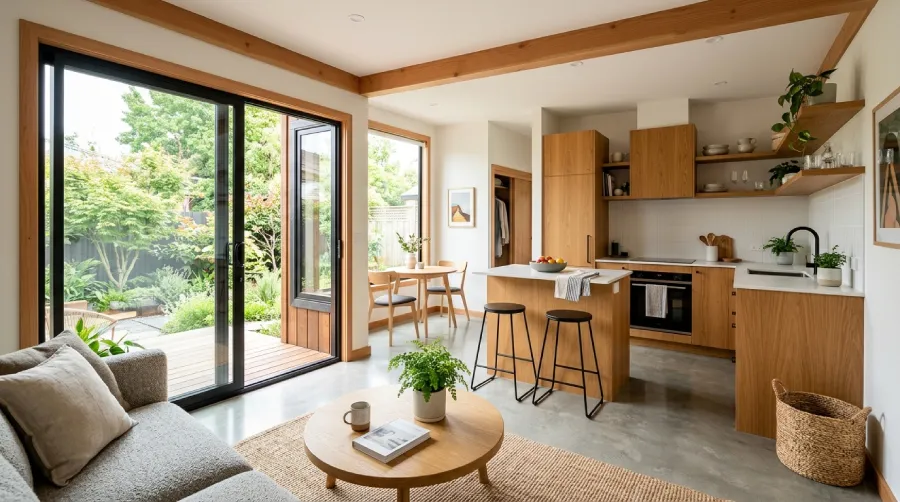
Strong ADU design is about more than fitting a room, bathroom, and kitchen into a small footprint.
The best plans create openness, flow, storage, and natural light while supporting how your family will actually live in the space.
Our team explores design options that help small homes feel modern and comfortable, from window placement to custom millwork, appliances, and durable materials.
We pay close attention to every design detail so the finished ADU feels intentional, efficient, and comfortable to live in.
Natural Light
Natural light can completely change how an ADU feels. We design openings, circulation, and interior sightlines to make compact square footage feel bigger and more inviting.
In Costa Mesa, that may mean bright coastal-inspired interiors, while in Mission Viejo, it may mean balancing light, privacy, and backyard use for a growing family.
Guest House Possibilities
A well-planned guest house can work for various purposes over time.
It may begin as a space for visiting family, then become a home office, creative studio, or rental unit later.
Detached ADUs and Other Build Types
Different properties call for different solutions.
Papaya helps clients compare detached ADUs, attached layouts, conversions, and above-garage possibilities based on budget, access, and future use.
Detached ADUs
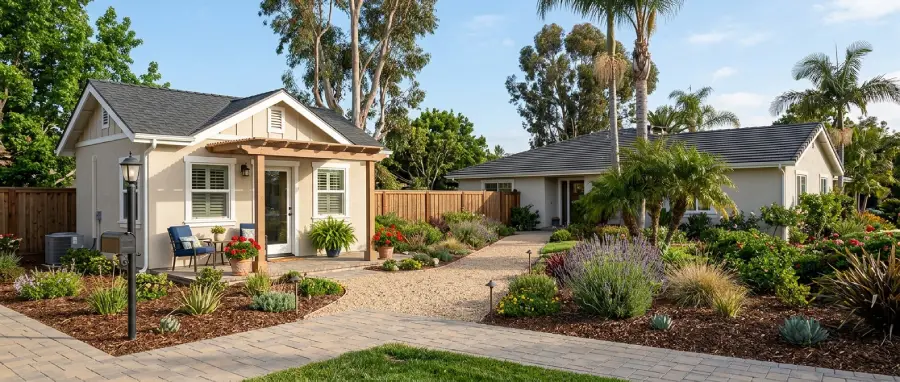
Detached ADUs are standalone homes with complete living amenities, giving families privacy and independence on the same lot.
They are often ideal when the goal is a full secondary dwelling unit with its own identity, whether for rent, multigenerational living, or a long-term investment.
Homeowners in Irvine often like detached layouts when they want separation between the ADU and the main house.
Attached ADUs
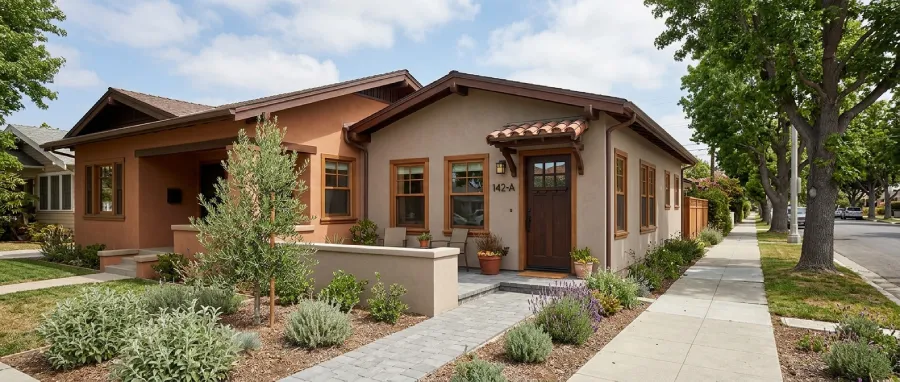
An attached ADU is built onto the existing structure of the house, creating additional living space while keeping the layout more connected.
This option can work well on tighter sites where setbacks, access, or yard configuration make a fully separate builder approach less practical.
Garage Conversions
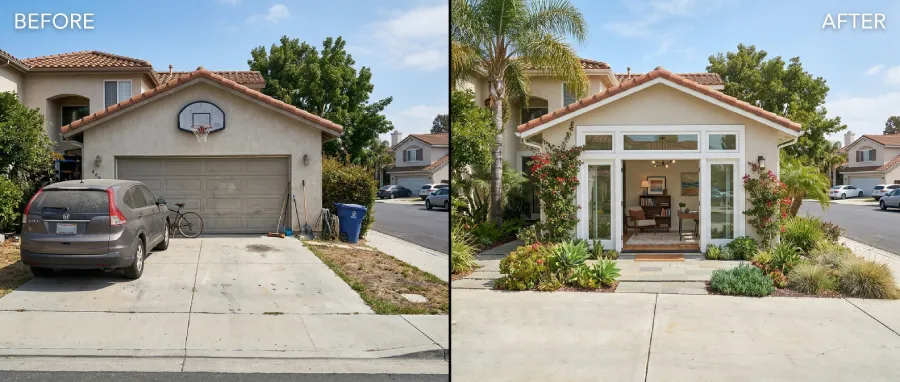
Garage conversions are often one of the fastest ways to create legal living space from existing garages.
Instead of expanding far into the yard, the project transforms a structure you already have into a finished ADU, guest house, or flexible room with bath and kitchen functions.
For some older homes in Fullerton or Laguna Niguel, garage conversions make sense because they can preserve more open yard area while reducing major site disruption.
Under state law, converted existing garages may be treated differently from new construction for setback purposes, while new detached structures commonly face side and rear setbacks of no more than four feet.
Above-Garage ADUs
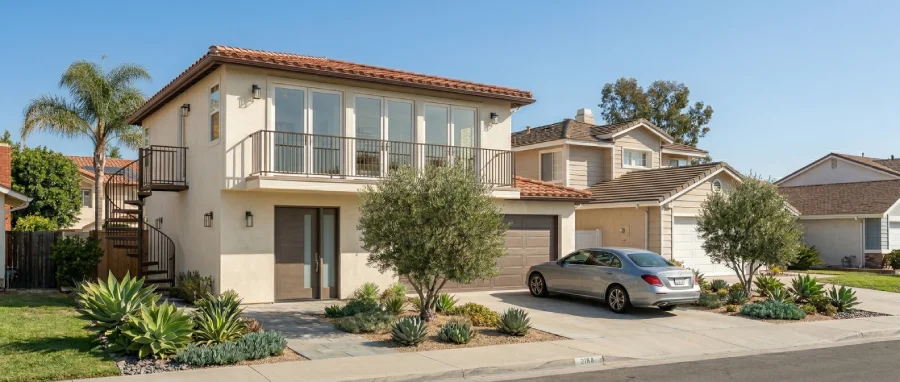
When lot coverage is limited, building over a garage can create more space without significantly expanding the footprint of the property.
This design-build option may require structural engineering and careful coordination, but it can open up smart possibilities on urban and suburban lots alike.
Rental Income and Long-Term Value
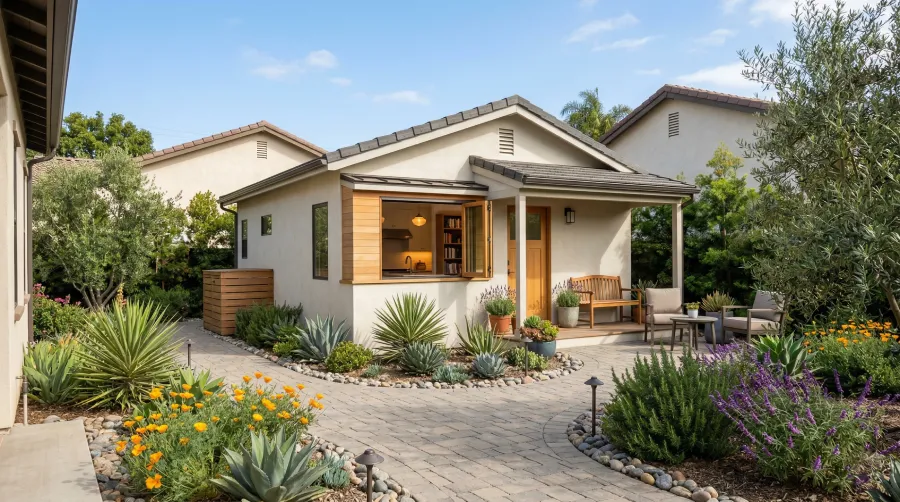
For many homeowners, an ADU is both a lifestyle upgrade and a financial strategy.
Accessory dwelling units can create rental income, support family independence, and improve the usefulness of the property for years to come.
They may also help offset remodeling expenses by creating more income opportunities rather than leaving underused square footage idle.
HCD also notes that ADUs can provide a source of income and flexibility for extended families.
No trusted ADU contractor should promise exact rent or resale gains before reviewing the location, market, and finished design.
Our experienced team focuses on realistic possibilities, not inflated assumptions.
Design Build ADU Contractors for Less Stress
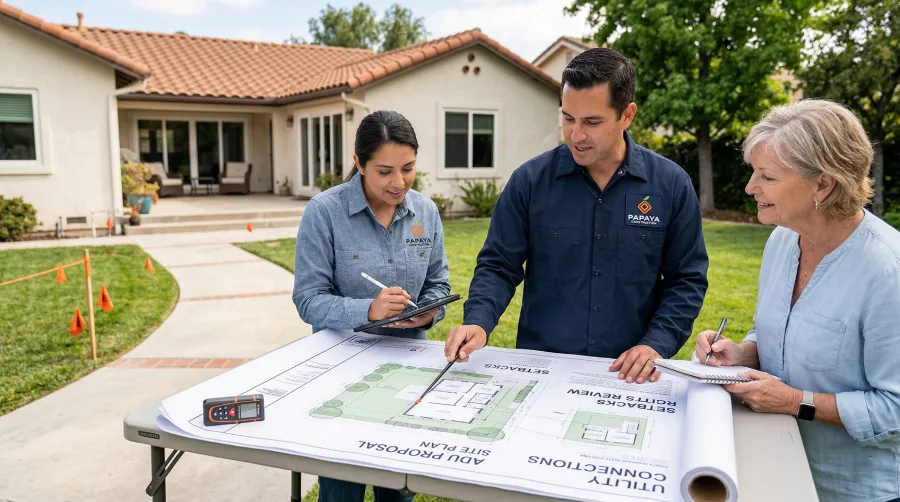
Papaya Construction Group offers a true design-build approach for homeowners who want one team handling ADU design, permitting, and construction.
Homeowners often prefer one team that can guide the whole process with better continuity from design through construction.
In-House Design and Planning
Our team studies the lot, utility connections, access, setbacks, and intended use of the new unit before design moves too far.
In some cases, we can also discuss pre-designed plans as a starting point before moving into a more customized ADU design for the property.
That early due diligence helps identify site constraints, utility considerations, and access issues before the design moves too far.
Permit and Construction Coordination
Papaya manages permits, submittals, revisions, and construction coordination as part of the service.
California HCD says ADU approvals are generally ministerial when a proposal meets objective standards, although city comments and revision cycles can still affect the timeline.
For local guidance, homeowners can review the California ADU handbook and the local ADU permit information.
Why Homeowners Choose Papaya as Their Trusted ADU Contractor
Papaya Construction Group brings together in-house ADU design, construction management, and permit coordination under one team.
The company holds a B – General Building Contractor license and a C-27 – Landscaping license, giving homeowners a more coordinated path from design through construction.
That regional experience helps us manage city expectations and design possibilities without losing sight of your budget, vision, and family goals.
Learn more about our Orange County construction company and read about Papaya Construction Group and our background.




Orange County Budget, Cost, and What to Expect
More Space Without Losing the Existing Property Flow
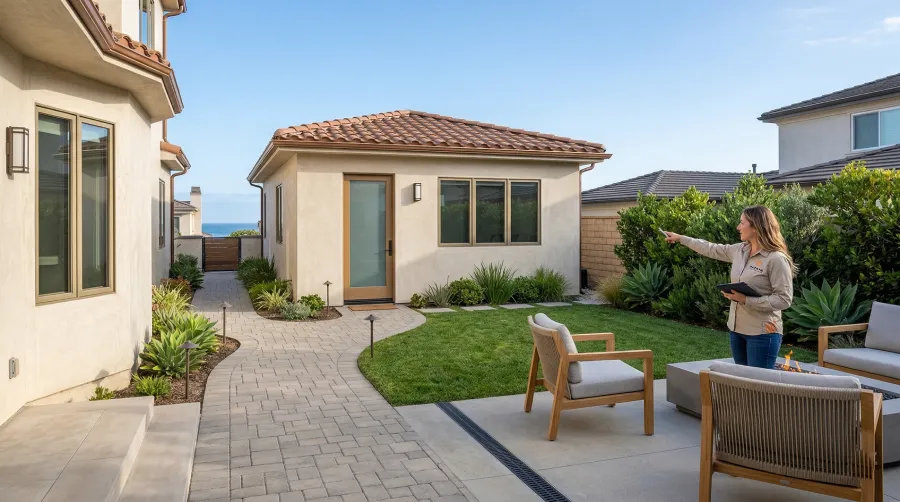
A successful ADU should feel connected to the life of the property, even when it functions as an independent house.
We focus on circulation, yard relationships, privacy, and cohesive materials so the new space feels intentional.
When needed, Papaya can also coordinate related site and outdoor work through our exterior contractors in Orange County and landscape design services to support access, patios, drainage, and curb appeal.
For homeowners in Huntington Beach, Garden Grove, and Orange who own wider lots, that might mean shaping exterior paths and utility runs around the new secondary dwelling unit.
In Tustin, Yorba Linda, or Newport Beach, the priority may be preserving more open family yard space while still creating a complete, modern unit.
What Our 3-Step Process Looks Like
Accessory Dwelling Units Frequently Asked Questions
Start Your Orange County ADU Construction Today
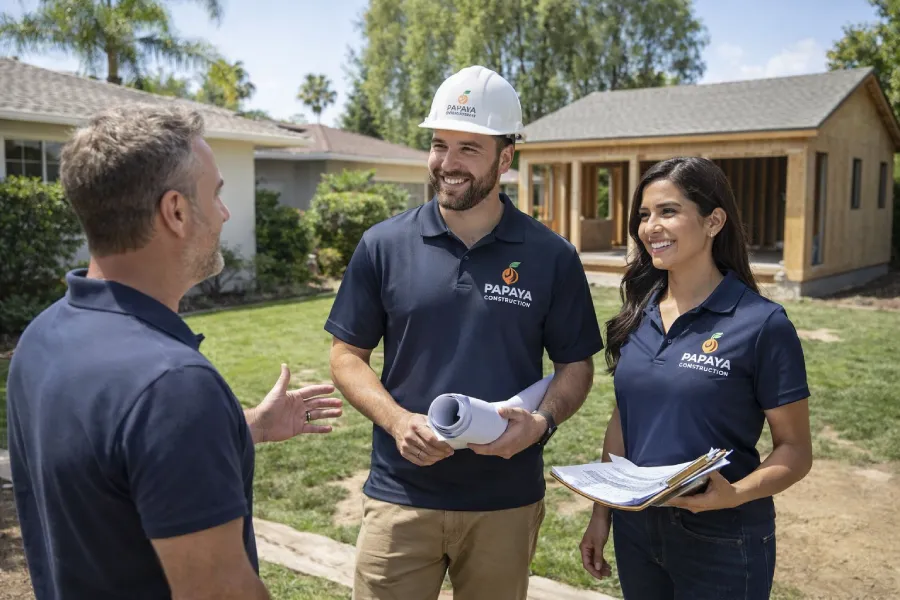
If you are ready to explore ADU construction in Orange County, CA, Papaya Construction Group can help you create a design-build plan that matches your property, your family, and your goals.
Contact our team to discuss your vision, budget, and timeline with an expert team that manages the entire process from start to finish.